Pvt bank employee arrested on Rs 1 cr cheating caseC
A relationship manager of a private bank was arrested by Kolkata Police (KP) on Wednesday evening on charge of allegedly cheating a woman consumer of around Rs one crore.Kolkata
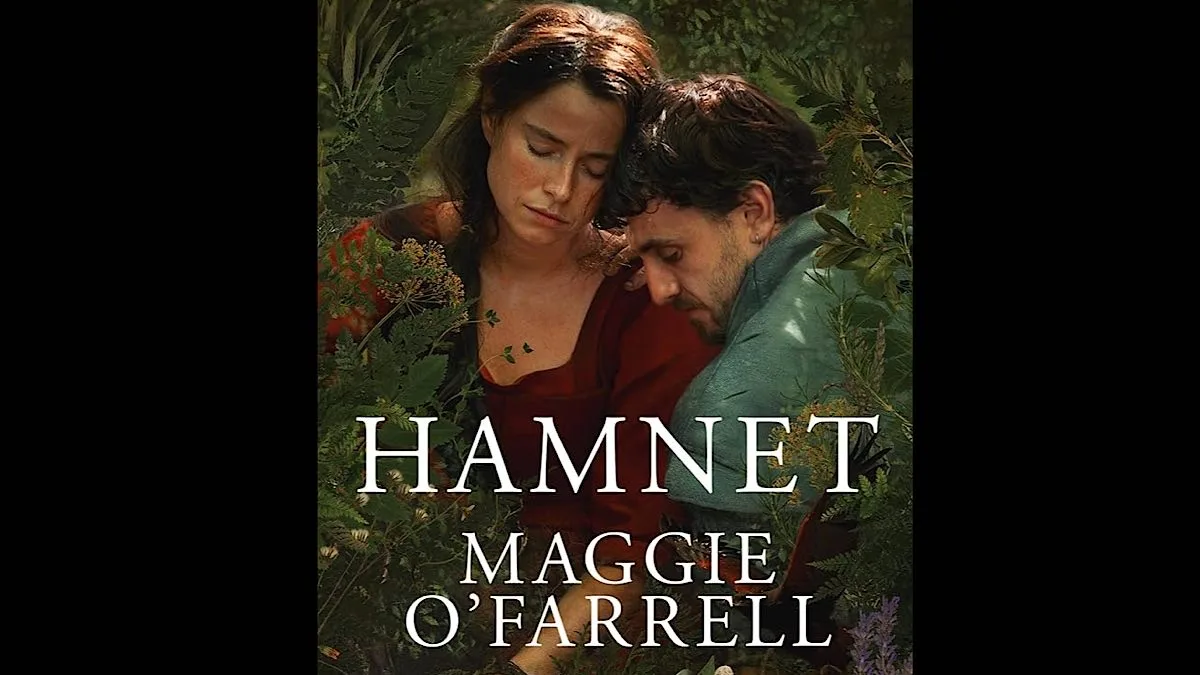
An adaptation of Maggie O’Farrell’s novel imagines how the death of Shakespeare’s young son may have shaped the creation of Hamlet — revealing how grief, faith and art intertwine in humanity’s search for meaning.




Hamnet
An adaptation of Maggie O’Farrell’s novel imagines how the death of Shakespeare’s young son may have shaped the creation of Hamlet — revealing how grief, faith and art intertwine in humanity’s search for meaning. “He was a man, take him for all in all, I shall not look upon his like again.” — Hamlet, Act 1,Scene 2 Grief rarely moves in straight lines. It lingers, fractures, withdraws, and sometimes seeks refuge in unexpected places. At its core, Hamnet offers a genuine and visceral portrait of grief, one that unsettles the familiar narratives surrounding the death of a child.
And yet, in the end, as Shakespeare himself reminds us, “the rest is silence.” Based on Maggie O’Farrell’s celebrated novel Hamnet, the film follows William Shakespeare (played by Paul Mescal) and his wife Agnes (Golden Globe winner Jessie Buckley) as they navigate a heartbreak that seems to defy the natural order of existence. Their relationship is pushed almost to its breaking point, stirring deep currents of rage, depression, guilt, and isolation. When their eleven-year-old son Hamnet falls victim to the bubonic plague, Agnes remains at home caring for his twin sister while William is away in London. At first, both parents cry out in anguish over the loss of their son. But grief does not unfold in the same way for everyone.
Advertisement
Their emotional and physical responses soon begin to diverge. William withdraws from the scene of his sorrow, leaving his family behind and returning to London, where he throws himself into the only refuge he knows: writing. A GRIEF EXPLORED In Maggie O’Farrell’s fictional telling, Shakespeare confronts his grief by immortalising his son through the epic tragedy Hamlet. By casting himself symbolically as the ghost, William is able to rewrite the moment history denied him. Through the play, he becomes present at Hamlet’s death and offers the farewell he was unable to give his son in life.
Advertisement
Agnes, however, is left to wrestle with a different torment. She is consumed with remorse, constantly wondering whether she did enough to save her son with the medicines and treatments she had been raised to trust. The relationship between Hamnet and Hamlet therefore lies at the very heart of the story. Both the novel and the film suggest that Shakespeare’s greatest tragedy may itself have emerged from the deepest well of personal grief. At times the connection appears in striking and almost painful ways, such as when Will delivers the immortal soliloquy “To be, or not to be” while walking along the riverbank. “Ultimately, torrents of tears and lamentation are a rightful response to the brokenness of this world.”
What distinguishes Chloé Zhao’s films is the quiet way they reveal the transcendent presence within nature. From The Rider to her Oscar-winning Nomadland, and even her underappreciated Marvel film Eternals, Zhao repeatedly discovers the mysterious within the ordinary, allowing familiar landscapes to acquire unexpected meaning. That sensibility becomes the defining strength of Hamnet, Zhao’s highly anticipated fifth feature. The fictional account of how William Shakespeare and his wife cope with the loss of their son has already moved festival audiences and critics alike, often leaving them in tears.
Jessie Buckley’s performance, in particular, has drawn widespread acclaim for its raw emotional intensity. Agnes’ affinity with nature and her instinctive belief in magic also feels strikingly resonant in the present cultural moment. Perhaps driven by a desire to establish some sense of stability in an increasingly uncertain world, nearly 77 per cent of Gen Z now identify themselves as spiritual.
Still living in the aftermath of a global pandemic, and amid growing international instability and rising child mortality rates in certain parts of the world, many young people appear drawn to practices that promise some measure of control over life’s uncertainties like gemstones, herbal medicines, sage burning, and tarot readings among them. THE QUESTION OF SUFFERING For Agnes, her son’s death reopens older wounds. Having witnessed her own mother die after childbirth, she had long refused to participate in church prayers.
Like many others confronted with unbearable loss, she finds herself struggling to reconcile how God can be both omnibenevolent and omnipotent in a world that permits such suffering. Even today, the problem of evil and human suffering remains one of the most enduring challenges in the study of faith. In the closing sequences of this exquisitely filmed meditation on the fragile boundary between life and death, Agnes and William confront their grief in a deeply theatrical moment of recognition.
During a live performance of Hamlet, William looks directly toward his wife as he delivers a poignant farewell to his son. At the same moment, Agnes reaches out and clasps Hamlet’s hand as the prince draws his final breath. Their eyes meet. It is a moment of profound, wordless understanding. Agnes and William mourn the same child — yet they carry their grief in entirely different ways. And yet, as Shakespeare himself reminds us, the play is the thing. The staging of Hamlet at the film’s climax becomes a powerful argument for art as a form of healing.
A similar idea appears, in a more subdued and quietly moving form, in another significant awards contender this season, Joachim Trier’s Sentimental Value. But in Hamnet, the performance of Hamlet unfolds with moments of extraordinary tension, as a bewildered and grieving Agnes slowly begins to understand what she is witnessing. HOPE NEVER FADES There is no denying that Chloé Zhao’s moving adaptation of O’Farrell’s 2020 novel contains passages of immense pain. Yet there is something strangely liberating in its unflinching portrayal of grief. Because, in the end, torrents of tears and lamentation are the rightful response to the brokenness of this world.
Like the God who wept at the tomb of Lazarus (John 11:33–36), we need not be ashamed to weep in the presence of death — to acknowledge the delicate anguish of losing a child, or to draw near to those who mourn even when words fail us. “The challenge of understanding how God can be both omnibenevolent and omnipotent causes Agnes to lose faith in Him altogether.” And yet hope remains. “Weeping may endure for a night, but joy comes in the morning” (Psalm 30:5).
Advertisement